Artificial Intelligence in Health Care

June 10, 2026

Key Findings

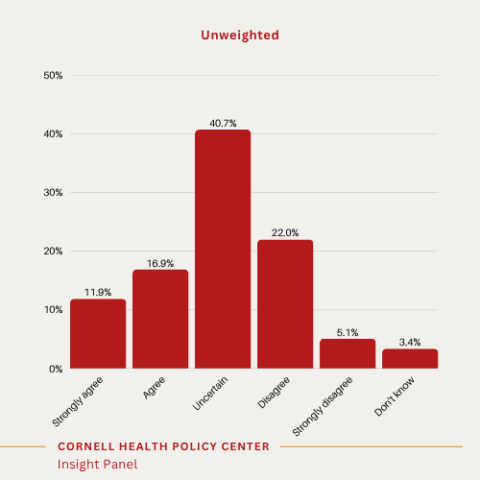
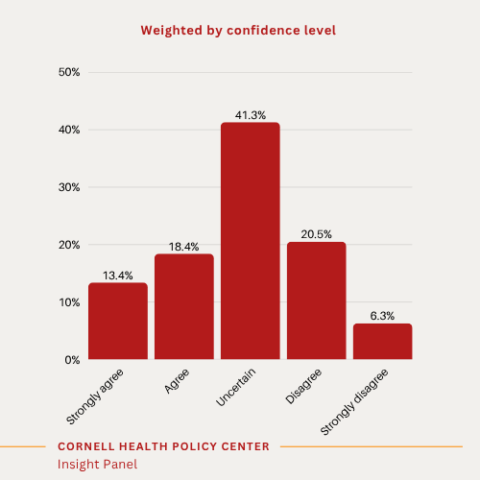
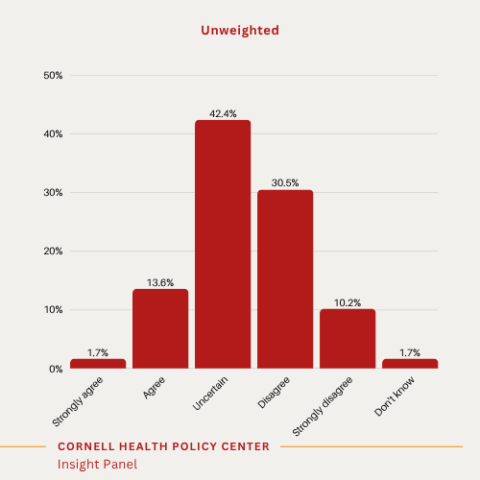
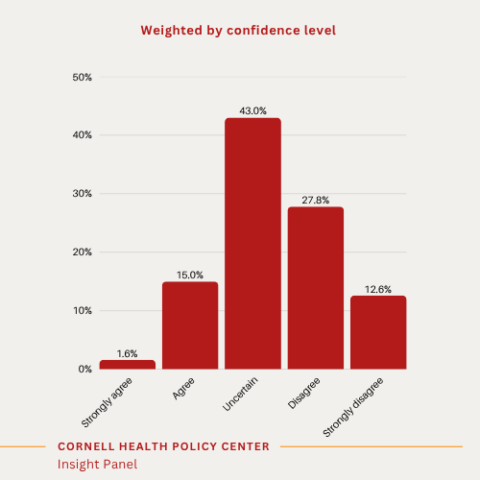
  • Survey respondents were largely unsure about whether adoption of agentic clinical A.I. would substantially improve patient access to basic primary care services, with more than 41% of panelists expressing uncertainty about the technology’s effects. Several panelists noted that primary care is fundamentally relationship-based and that A.I. is likely to be used for narrow clinical tasks as opposed to comprehensive care in the short-term. In the longer-term, panelists noted that A.I.’s impact will depend on regulatory policy and technological improvements.
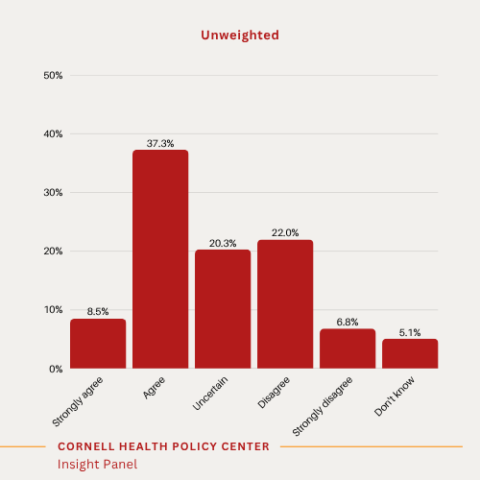
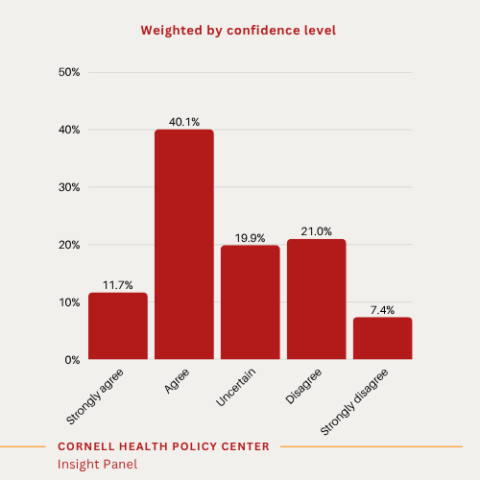
  • Nearly half (46%) of experts agreed or strongly agreed that F.D.A. regulation of clinical A.I. algorithms should emphasize post-market surveillance over premarket clearance; 29% disagreed or strongly disagreed, and another 20% were uncertain. A number of respondents indicated that both pre- and post-market oversight were important, and that the emphasis on one versus the other may vary based on the specific algorithm. Some experts expressed concerns about the feasibility of post-market surveillance, given the large number of algorithms.
  • Most experts (83%) were either uncertain or disagreed that legislation that would make F.D.A.-authorized A.I. algorithms eligible to prescribe medications would safely improve patient access to needed drugs. Panelists noted that such a policy would need substantial safeguards and that it was premature, given lack of clinical evidence and real-world experience.

Read the full Health Affairs Forefront summary of results here

Survey Questions

Please note: our surveys will consistently use two modifiers to describe the size of an effect: “Substantial”: when an effect is large enough to meaningfully influence policy decisions, program implementation, or outcomes of interest “Measurable”: when the direction of an effect is clear, but the effect may not be sufficiently large to make much of a difference for a given policy, program, or outcome. Weighting by confidence level removes responses of “don’t know” (weight equals 0). Unweighted responses with responses of “don’t know” removed were qualitatively similar to weighted responses. Unweighted results including “don’t know” responses are presented in the exhibits below.

Response rate of 94% (59 out of 63 panelists responded)


The use of artificial intelligence (A.I.) in medicine is rapidly increasing, with applications in health care administration, clinical decision support, and patient engagement, among others. Some observers have argued that A.I. technologies will substantially improve the quality, availability, and efficiency of care, while others have raised concerns about potential issues related to safety, effectiveness, bias, and workforce disruption. Regulatory considerations around clinical A.I. are in flux as the technology and its clinical applications continue to evolve.

Question 1: Adoption of agentic clinical A.I. will substantially improve patient access to basic primary care services in regions with workforce shortages:

a. Strongly agree
b. Agree
c. Uncertain
d. Disagree
e. Strongly disagree
f. Don’t know


Question 2: F.D.A. regulation of clinical A.I. algorithms should emphasize post-market surveillance over premarket clearance.

a. Strongly agree
b. Agree
c. Uncertain
d. Disagree
e. Strongly disagree
f. Don’t know


Question 3: A Congressional bill (H.R. 238, Healthy Technology Act) would allow A.I. algorithms that have been authorized by the F.D.A. to be eligible for licensing to prescribe medications. If passed, such a policy would safely improve patient access to needed drugs.

a. Strongly agree
b. Agree
c. Uncertain
d. Disagree
e. Strongly disagree
f. Don’t know


Individual Survey Responses

Question One

Adoption of agentic clinical A.I. will substantially improve patient access to basic primary care services in regions with workforce shortages.

NameVoteConfidenceComments
Margarita AlegriaAgree7
David AschStrongly agree8
John AyanianDisagree7
Peter BachNo response
Laurence BakerUncertain5
David BlumenthalUncertain7As someone who studies this subject, and is a primary care physician, I think it is premature to judge what impact AI will have on the availability, quality and equity of primary care services.
Erin Fuse BrownDisagree6Disagree that the impact of agentic AI will *substantially improve patient access*. At best it’s uncertain, but if it’s like other clinical technology innovations (EHRs, telehealth) it may not be able to close the gap caused by practitioner shortages.
Melinda BuntinAgree6
Michael F. CannonStrongly agree6In the long run.
Lawrence CasalinoUncertain5
Amitabh ChandraDon’t know0
Lanhee J. ChenUncertain6
Michael ChernewAgree8
Janet CurrieUncertain6I’m not sure AI can be trusted to deliver primary care without substantial oversight, and the understaffed places might be the least able to provide that oversight.
Lesley CurtisAgree6
David CutlerAgree6
Julie DonohueDisagree8There is no evidence that companies marketing AI clinical services will prioritize primary care services, or primary care shortage areas. In fact, financial incentives may run counter to marketing primary care services.
Joseph DoyleAgree8
David DranoveAgree8
Stacie DusetzinaStrongly disagree5
Jose EsarceDisagree7
Elliott FisherUncertain10
Richard FrankUncertain2
Craig GarthwaiteUncertain6The answer here depends on how regulation permits the use of AI to leverage non-physician providers in offering medical services. AI-augmented mid-level providers could expand access but would require some regulatory relief.
Darrell GaskinStrongly disagree10Primary care is about human contact.  A.I. will not be able to build trust with patients.
Martin GaynorDisagree7AI will initially be used to augment or substitute in familiar tasks and where it’s profitable. Regrettably, I don’t see expanding access fitting those criteria.
Sherry GliedDisagree7
David GrabowskiDisagree7I think “substantially improve” is too strong. It might improve certain aspects of care but it will not be uniform.
Jonathan GruberStrongly agree7Depends critically on evolution of scope of practice laws.
Vivian HoUncertain10It depends on what regulations are adopted. Incumbents could introduce barriers to entry.
Jason HockenberryUncertain9
Haiden HuskampAgree6
Benedic IppolitoUncertain5
Anupam JenaUncertain7
Nancy KeatingDisagree3
Aaron KesselheimUncertain10
Jonathan KolstadUncertain9Much of clinical medicine is not easy accessible to language-based AI. It is likely a new round of AI that is more native to the health care setting, not just agentic AI as it exists.
R Tamara KonetzkaUncertain7I’m confident we are uncertain. It could help but will require substantial oversight.
Rick KronickUncertain1
Valerie LewisDisagree5I have seen no data to this effect, and even the notion that agentic AI can supplant basic primary care sources suggests introducing a two tiered system (those that get human care and those that get AI care, even if with some human oversight) that requires significant ethical interrogation. We have a long history of racing to deploy scientific advances before reckoning with their ethics  and the human cost of getting that sequence wrong should give us serious pause before we make underserved regions the proving ground for agentic clinical AI’s role in primary care.
Nicole MaestasUncertain7
Tom McGuireStrongly agree8
Ellen MearaUncertain5I think it will measurably increase access, but countervailing forces, like use of AI in prior authorization, will hinder access.
Ateev MehrotraUncertain6Our hope with many new technologies such as AI is that they will differentially help those who live in underserved communities. However, the research generally shows the opposite. These technologies are differentially used by those who live in wealthier, urban communities.

Having all said that, it is possible that AI is different. Also, it may be possible that it improves access in communities with workforce shortage but still worsens existing disparities.

David MeltzerStrongly disagree9
Joseph NewhouseUncertain8I’m not sure if there is a difference between uncertain and don’t know.
Sean NicholsonStrongly agree8
Steve ParenteNo response
Stephen PatrickUncertain8Access to basic primary care is less clear. There are clear use cases throughout medicine, but access to primary care may or may not be one. At present, clinical AI is most useful as an assistant rather than a replacement. I’m skeptical that will change for some areas on medicine, especially primary care.
Harold PollackNo response
Daniel PolskyUncertain8I’ve very confident in ‘uncertain’.  The potential is there, but there is no way to know how this will play out.  If I were to guess, the services may be hard to reimburse which would push against access.
Ninez PonceAgree7
Thomas RiceDisagree3
Meredith RosenthalDisagree7It is hard to predict what AI will do in 5+ years but in the short run it is poised to be a complement rather than a substitute for human labor
Joseph RossDisagree8I am disagreeing because I don’t believe that agentic AI provides primary care services. Might it automatically refill medication orders or order screening tests, yes? But will it engage patients in counseling and management decisions, not in the way that I define primary care.
Brendan SalonerUncertain5It depends on how much patients feel that they can trust agents, how accurate and vetted the agent’s information is, and how strong the regulatory oversights are.
Kosali SimonNo response
Jon SkinnerAgree8
Ben SommersUncertain5Does an AI chatbot providing guidance on whether someone needs to see a physical provider count as access?
Neeraj SoodStrongly agree6
David StevensonDisagree3
Kevin VolppStrongly agree8Huge gaps in care could likely be addressed if agentic AI is combined with opt out type defaults
Rachel WernerDon’t know07
Strongly agree8
Disagree7
No response
Uncertain5
Uncertain7As someone who studies this subject, and is a primary care physician, I think it is premature to judge what impact AI will have on the availability, quality and equity of primary care services.
Disagree6Disagree that the impact of agentic AI will *substantially improve patient access*. At best it’s uncertain, but if it’s like other clinical technology innovations (EHRs, telehealth) it may not be able to close the gap caused by practitioner shortages.
Agree6
Strongly agree6In the long run.
Uncertain5
Don’t know0
Uncertain6
Agree8
Uncertain6I’m not sure AI can be trusted to deliver primary care without substantial oversight, and the understaffed places might be the least able to provide that oversight.
Agree6
Agree6
Disagree8There is no evidence that companies marketing AI clinical services will prioritize primary care services, or primary care shortage areas. In fact, financial incentives may run counter to marketing primary care services.
Agree8
Agree8
Strongly disagree5
Disagree7
Uncertain10
Uncertain2
Uncertain6The answer here depends on how regulation permits the use of AI to leverage non-physician providers in offering medical services. AI-augmented mid-level providers could expand access but would require some regulatory relief.
Strongly disagree10Primary care is about human contact.  A.I. will not be able to build trust with patients.
Disagree7AI will initially be used to augment or substitute in familiar tasks and where it’s profitable. Regrettably, I don’t see expanding access fitting those criteria.
Disagree7
Disagree7I think “substantially improve” is too strong. It might improve certain aspects of care but it will not be uniform.
Strongly agree7Depends critically on evolution of scope of practice laws.
Uncertain10It depends on what regulations are adopted. Incumbents could introduce barriers to entry.
Uncertain9
Agree6
Uncertain5
Uncertain7
Disagree3
Uncertain10
Uncertain9Much of clinical medicine is not easy accessible to language-based AI. It is likely a new round of AI that is more native to the health care setting, not just agentic AI as it exists.
Uncertain7I’m confident we are uncertain. It could help but will require substantial oversight.
Uncertain1
Disagree5I have seen no data to this effect, and even the notion that agentic AI can supplant basic primary care sources suggests introducing a two tiered system (those that get human care and those that get AI care, even if with some human oversight) that requires significant ethical interrogation. We have a long history of racing to deploy scientific advances before reckoning with their ethics  and the human cost of getting that sequence wrong should give us serious pause before we make underserved regions the proving ground for agentic clinical AI’s role in primary care.
Uncertain7
Strongly agree8
Uncertain5I think it will measurably increase access, but countervailing forces, like use of AI in prior authorization, will hinder access.
Uncertain6Our hope with many new technologies such as AI is that they will differentially help those who live in underserved communities. However, the research generally shows the opposite. These technologies are differentially used by those who live in wealthier, urban communities.

Having all said that, it is possible that AI is different. Also, it may be possible that it improves access in communities with workforce shortage but still worsens existing disparities.

Strongly disagree9
Uncertain8I’m not sure if there is a difference between uncertain and don’t know.
Strongly agree8
No response
Uncertain8Access to basic primary care is less clear. There are clear use cases throughout medicine, but access to primary care may or may not be one. At present, clinical AI is most useful as an assistant rather than a replacement. I’m skeptical that will change for some areas on medicine, especially primary care.
No response
Uncertain8I’ve very confident in ‘uncertain’.  The potential is there, but there is no way to know how this will play out.  If I were to guess, the services may be hard to reimburse which would push against access.
Agree7
Disagree3
Disagree7It is hard to predict what AI will do in 5+ years but in the short run it is poised to be a complement rather than a substitute for human labor
Disagree8I am disagreeing because I don’t believe that agentic AI provides primary care services. Might it automatically refill medication orders or order screening tests, yes? But will it engage patients in counseling and management decisions, not in the way that I define primary care.
Uncertain5It depends on how much patients feel that they can trust agents, how accurate and vetted the agent’s information is, and how strong the regulatory oversights are.
No response
Agree8
Uncertain5Does an AI chatbot providing guidance on whether someone needs to see a physical provider count as access?
Strongly agree6
Disagree3
Strongly agree8Huge gaps in care could likely be addressed if agentic AI is combined with opt out type defaults
Don’t know0


Question Two

F.D.A. regulation of clinical A.I. algorithms should emphasize post-market surveillance over premarket clearance.

NameVoteConfidenceComments
Margarita AlegriaAgree8
David AschAgree7
John AyanianAgree5
Peter BachNo response
Laurence BakerDisagree7
David BlumenthalDisagree8AI is multiple technologies.  Premarket clearance works for some, but not others.  Post-market surveillance is important for all.
Erin Fuse BrownAgree4FDA regulation should do both initial premarket clearance and robust post-market surveillance. Unlike static devices, premarket clearance alone is insufficient– however, this doesn’t mean that FDA should de-emphasize premarket review, however, it should engage in robust post-market surveillance (pharmacovigilence, safety monitoring, learning systems oversight) to track how the dynamic nature of AI algorithms is operating in practice. However, pre-market clearance for every new iteration of the technology is likely unworkable.
Melinda BuntinDisagree4
Michael F. CannonStrongly agree10If we’re in the realm of “should,” the FDA should neither impose barriers to AI entering markets nor conduct postmarket surveillance of AI.

Even though I oppose both, I answered “strongly agree” because premarket barriers are far worse.

Lawrence CasalinoUncertain5Algorithms will change so rapidly that hard to see how FDA can approve.
Amitabh ChandraUncertain5
Lanhee J. ChenAgree7
Michael ChernewStrongly agree7
Janet CurrieAgree8There is so much we don’t understand about how AI will work in practice that it seems foolish to believe that premarket clearance will identify all possible problems.
Lesley CurtisAgree7
David CutlerUncertain6
Julie DonohueStrongly disagree8We need a completely new regulatory regime to address AI clinical services that includes both pre- and post-marketing components.
Joseph DoyleAgree8Human decision makers will be adopting tools to improve quality and lower costs. We need to learn what works best, and that takes experimentation.
David DranoveStrongly agree9
Stacie DusetzinaDisagree7Both should be emphasized.
Jose EsarceDisagree7
Elliott FisherDisagree3
Richard FrankDisagree7
Craig GarthwaiteUncertain6
Darrell GaskinUncertain5
Martin GaynorDon’t know0
Sherry GliedAgree6
David GrabowskiAgree7
Jonathan GruberUncertain5We should shift towards post-market, but not sure it should be emphasized.
Vivian HoUncertain10I don’t know enough about clinical algorithms to make an informed judgement on this question. And I’m wondering whether the FDA has sufficient expertise either.
Jason HockenberryStrongly disagree7It is still unclear whether current models can distinguish between quality of evidence.
Haiden HuskampAgree7
Benedic IppolitoAgree4
Anupam JenaUncertain7
Nancy KeatingUncertain3
Aaron KesselheimDisagree9While post-market surveillance is critical, we should not abandon pre-approval testing and feedback
Jonathan KolstadStrongly agree10
R Tamara KonetzkaAgree8
Rick KronickAgree8
Valerie LewisUncertain10I don’t know enough about the FDA regulatory process to weigh in confidently on this. In addition, this question phrases these as a zero sum trade off. We absolutely need post-market surveillance, but also not at the expense of premarket clearance.
Nicole MaestasDon’t know0
Tom McGuireAgree8
Ellen MearaAgree5
Ateev MehrotraDisagree6The idea of post-market clearance is great in theory, but may be impractical in many cases. I worry that it means that a lot of AI algorithms get released and widely adopted before we know they have harmed people. An underlying assumption with post-market surveillance is that algorithms are low risk. I worry that assumption may be incorrect.
David MeltzerStrongly disagree7
Joseph NewhouseUncertain8Obviously the FDA could do both; I don’t think enough is now known to emphasize one strategy over the other and the optimal strategy may well be an adaptive strategy, emphasizing pre-market for agents that do poorly on initial pre-market testing and conversely.
Sean NicholsonAgree7The FDA cannot keep pace with AI evolution and, importantly, providers who implement these new services have incentives to carefully consider patient safety and unintended consequences.
Steve ParenteNo response
Stephen PatrickAgree7
Harold PollackNo response
Daniel PolskyAgree6
Ninez PonceUncertain5
Thomas RiceStrongly disagree6
Meredith RosenthalAgree8
Joseph RossAgree9Agree, but this is mostly because algorithms change so frequently in response to new data and inputs. So to monitor for clinical validity and utility, and ensure that the algorithm is not drifting or embedding bias, postmarket surveillance is the only choice.
Brendan SalonerDisagree7It’s very hard to put the genie back in the bottle — the FDA needs to pursue regulation on both tracks with vigor (and catch up, they are already behind!)
Kosali SimonNo response
Jon SkinnerStrongly agree8
Ben SommersDisagree5
Neeraj SoodDisagree6
David StevensonDisagree3
Kevin VolppAgree7
Rachel WernerDon’t know0


Question Three

A Congressional bill (H.R. 238, Healthy Technology Act) would allow A.I. algorithms that have been authorized by the F.D.A. to be eligible for licensing to prescribe medications. If passed, such a policy would safely improve patient access to needed drugs.

NameVoteConfidenceComments
Margarita AlegriaUncertain5
David AschDisagree5
John AyanianDisagree5
Peter BachNo response
Laurence BakerUncertain5
David BlumenthalUncertain9Again, I know too much.  We are just receiving un-peer-reviewed data from the first effort to allow AI to prescribe, Doctronics.  Premature to reach conclusions.
Erin Fuse BrownDisagree6FDA approval is not a substitute for professional clinical judgment of a prescriber. The policy proposed in HR 238 contains too few safeguards to ensure that drugs are safely prescribed.
Melinda BuntinStrongly agree6
Michael F. CannonUncertain10Not familiar with the bill.

All available evidence shows that prescription regulation fails to achieve its goals. Congress should eliminate it.

Short of that, anything that reduces, avoids, or eliminates the barriers prescription regulation puts in the way of patients accessing the medicines they want is worth doing.

Lawrence CasalinoUncertain5
Amitabh ChandraUncertain6
Lanhee J. ChenUncertain7
Michael ChernewAgree8But would come with meaningful risks that need to be addressed
Janet CurrieDisagree7While many clinicians make questionable prescribing decisions, or fail to consider things like drug interactions, AI should not be used to prescribe medications without oversight.
Lesley CurtisUncertain7
David CutlerUncertain6It depends in part on how frequently the algorithm is updated and whether pharmaceutical coimpanies are allowed to pay for placement on the app.
Julie DonohueUncertain9AI licensed prescribers may simply substitute for human prescribers by offering services at a lower price. Inequities in access to essential medicines may increase if low-income, uninsured individuals are not able to afford these services. The effects from this change depend on payment structure, organizational and oversight. FDA making a change in the absence of payment reform will not solve the affordability issue.
Joseph DoyleDisagree6
David DranoveAgree8
Stacie DusetzinaStrongly disagree7“Safely improve” is the main concern / disagreement that I have. Also, relative to what – limits on prescribing practices for non MD clinicians?
Jose EsarceStrongly disagree8
Elliott FisherStrongly disagree9
Richard FrankUncertain2
Craig GarthwaiteDisagree5I don’t see a lot of high quality evidence that this is a stumbling block to prescriptions.
Darrell GaskinDisagree8Using A.I. to prescribe medication is tantamount to self prescribing.
Martin GaynorUncertain5I doubt that the FDA examines and tests AI in ways that are relevant and important for this issue in deciding on clearances.
Sherry GliedUncertain4
David GrabowskiDisagree7
Jonathan GruberUncertain5
Vivian HoUncertain10Access will depend on a wider set of regulations. Incumbents (I’m thinking physician associations) can construct barriers to entry.
Jason HockenberryUncertain9
Haiden HuskampDisagree7
Benedic IppolitoDisagree3Among other concerns, I expect insurers to take a skeptical view towards AI-generated prescriptions and adjust utilization management accordingly before blindly paying.
Anupam JenaUncertain7
Nancy KeatingDisagree3Not sure how this would work, but I would want to see studies to demonstrate safety.
Aaron KesselheimDisagree8Maybe eventually with appropriate guiderails, but such a step seems too premature at this point
Jonathan KolstadAgree9
R Tamara KonetzkaUncertain7Again depends on degree of oversight. Not clear that the workforce bottleneck is in prescribing.
Rick KronickDisagree8
Valerie LewisStrongly disagree7It is hard to see given the science on AI (and the lack of science in many domains) how the FDA could possibly be up to speed enough on this to adequately screen and license algorithms to prescribe medications. (It’s mind blowing to me that for example this would mean from a federal perspective there are many states where an NP, psychologist, or pharmacist cannot prescribe but an AI algorithm necessarily developed very recently would be trusted with this). I cannot imagine enough safeguards on this given the state of AI at the moment that this would be viable in any setting. The agentic piece of AI simply is not advanced enough or remotely vetted enough to handle this.
Nicole MaestasUncertain7
Tom McGuireAgree8
Ellen MearaUncertain5
Ateev MehrotraUncertain6The key word in the question that tripped me up was “safely.”  We don’t know how effective they will be and what error rate is acceptable. I think it is important to test this idea, but rigorous testing is key.
David MeltzerAgree5
Joseph NewhouseDisagree5I doubt it would on net much affect access but it may improve prescribing, including reducing overprescribing (polypharmacy).
Sean NicholsonDisagree7This could improve provider efficiency but is not likely to affect access substantially.  Getting a physician to refill a prescription is not a major access barrier.
Steve ParenteNo response
Stephen PatrickStrongly disagree8I’ve not seen clear safety analyses. Perhaps there are data out there, however, there are elements that seem like they are moving faster than safety analyses … this is likely one of them.
Harold PollackNo response
Daniel PolskyAgree7
Ninez PonceUncertain5
Thomas RiceUncertain5
Meredith RosenthalUncertain10Again, I think AI will mostly be improve quality and efficiency but not access.
Joseph RossStrongly disagree8Allowing AI algorithms to newly prescribe medications presents substantial risk for misuse and waste.
Brendan SalonerDisagree6In theory this could work, but the current FDA is far too lax in its oversight and the Trump Administration is not taking any strong lines with the AI industry.
Kosali SimonNo response
Jon SkinnerDisagree5
Ben SommersUncertain5
Neeraj SoodAgree6
David StevensonDisagree3
Kevin VolppAgree5
Rachel WernerDon’t know0