
Health Care Affordability
Key Findings
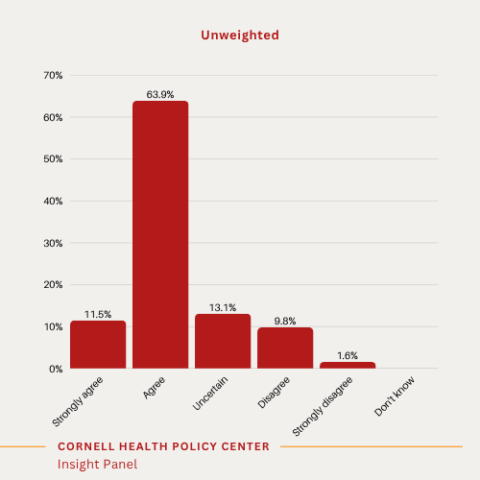
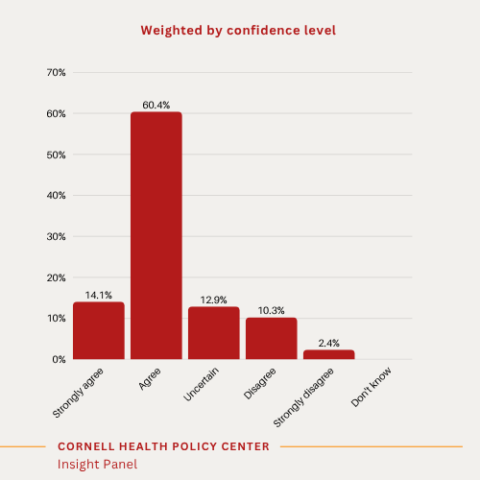
- Three-quarters of survey respondents agreed that residents of states that introduce caps on the prices that hospitals can charge commercial insurers would experience substantial reductions in total health care costs. However, some raised concerns about potential unintended consequences for access and quality and questioned whether the policy was politically feasible.
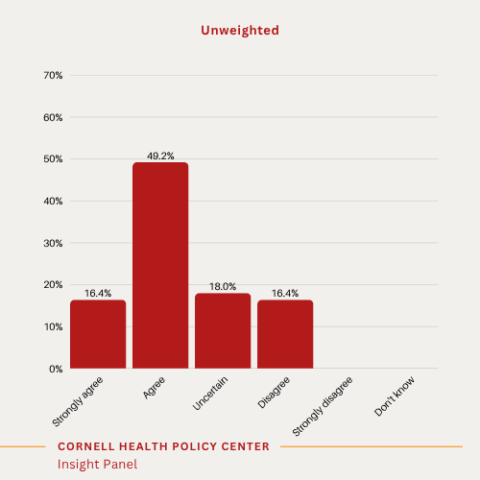
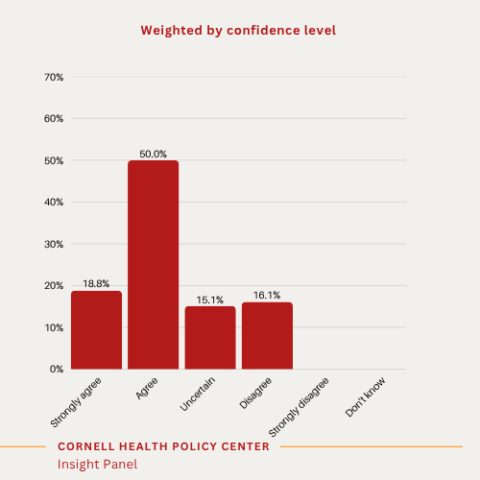
- Sixty-six percent of experts felt that stronger federal antitrust enforcement limiting new hospital mergers would substantially reduce growth of health care prices, while 16 percent disagreed and 18 percent were uncertain. Some noted that blocking new mergers may have limited impact on prices because of the high level of existing consolidation among U.S. hospitals and argued that breaking up existing mergers would have a larger impact.
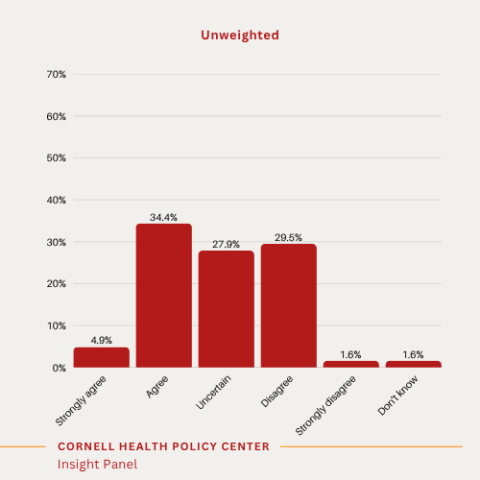
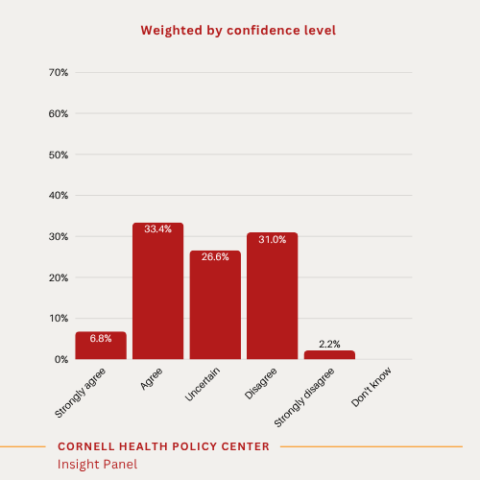
- Respondents held mixed views about whether reference pricing models in employer-sponsored insurance — whereby plans set a maximum amount they will pay for a given service and consumers pay the balance — would substantially reduce insurance premiums. Some noted that reference pricing might not be feasible for many health care services, that patients do not seem to shop for most types of care, and that lower insurer spending does not necessarily translate into lower premiums for consumers.
Read the full Health Affairs Forefront summary of results here
Survey Questions
Please note: our surveys will consistently use two modifiers to describe the size of an effect: “Substantial”: when an effect is large enough to meaningfully influence policy decisions, program implementation, or outcomes of interest “Measurable”: when the direction of an effect is clear, but the effect may not be sufficiently large to make much of a difference for a given policy, program, or outcome. Weighting by confidence level removes responses of “don’t know” (weight equals 0). Unweighted responses with responses of “don’t know” removed were qualitatively similar to weighted responses. Unweighted results including “don’t know” responses are presented in the exhibits below.
Response rate of 94% (61 out of 65 panelists responded, 1 abstained)
Americans consistently rank the high cost of health care as the most important health care issue facing the country, and some polls have found that voters view health care affordability as an even more pressing concern than the overall state of the economy. In response, policymakers are considering a range of proposals intended to slow the growth of health care costs, including reference pricing, price caps, and stronger anti-trust enforcement.
Question 1: Adopting reference pricing models in employer-sponsored insurance for common shoppable health care services (e.g. elective imaging and joint replacements) would substantially reduce insurance premiums for employees.
a. Strongly agree
b. Agree
c. Uncertain
d. Disagree
e. Strongly disagree
f. Don’t know
Question 2: Residents in states that impose caps on the prices that hospitals can charge commercial insurers (e.g., 1.5 times Medicare rates) would experience substantial reductions in total health care costs.
a. Strongly agree
b. Agree
c. Uncertain
d. Disagree
e. Strongly disagree
f. Don’t know
Question 3: Strong federal antitrust enforcement significantly limiting new mergers of hospital systems would substantially reduce the growth of health care prices in affected markets.
a. Strongly agree
b. Agree
c. Uncertain
d. Disagree
e. Strongly disagree
f. Don’t know
Individual Survey Responses
Question One
Adopting reference pricing models in employer-sponsored insurance for common shoppable health care services (e.g. elective imaging and joint replacements) would substantially reduce insurance premiums for employees.
| Name | Vote | Confidence | Comments | ||
|---|---|---|---|---|---|
| Margarita Alegria | Disagree | 7 | |||
| Joseph R. Antos | Agree | 5 | Could work in large urban markets with many competing providers–imaging is the easiest case. Market consolidation makes this approach less plausible. | ||
| David Asch | Disagree | 9 | Changes in payment systems and financing almost never produce large effects on costs in health care. Even in other industries, those changes reduce costs only when they motivate operational change in the industry, usually the removal of personnel. In health care they have been ineffective at creating operational change in part because of existing regulation, liability concerns, guilds, etc. | ||
| John Ayanian | Agree | 3 | |||
| Peter Bach | No response | ||||
| Laurence Baker | Disagree | 6 | |||
| Brian Blase | Agree | 10 | Reference pricing has been shown to be effective at reducing prices by an average of about 20%. There have been no adverse effects on access to care or quality. Implementing reference-based pricing for shoppable services is about the most effective reform possible that preserves choice and generates additional competition between providers. | ||
| David Blumenthal | Disagree | 7 | |||
| Erin Fuse Brown | Agree | 6 | I’m assuming by reference-based pricing, this is referring to setting a maximum price for a service at participating providers, with the patient paying the difference of a higher cost provider a la CalPERS. There is some uncertainty whether this would translate into premium savings because even if the high-priced providers reduce prices in response, it depends on whether those savings would be passed on by TPAs and other middlemen to employer plan sponsor, rather than captured as revenue. | ||
| Melinda Buntin | Agree | 7 | |||
| Michael F. Cannon | Strongly agree | 10 | Multiple studies found reference pricing quickly leads prices to fall dramatically (including/especially in concentrated markets). Findings confirmed economic theory (Arrow, 1963; Feldstein & Friedman, 1977) that health insurance increases medical prices. Researchers postulated greater price reductions were possible. Results would be sensitive to where employers set reference prices. | ||
| Lawrence Casalino | Agree | 6 | |||
| Amitabh Chandra | Agree | 6 | |||
| Lanhee J. Chen | Agree | 6 | |||
| Michael Chernew | Uncertain | 8 | The issue is what is meant by substantial and details of the model. It could be substantial, but I am uncertain if it would be implemented in a way that would yield substantial | ||
| Janet Currie | Agree | 7 | |||
| Lesley Curtis | Disagree | 8 | |||
| David Cutler | Agree | 6 | Reference pricing works better when employees are notified about a huge price discrepancy and offers are made to help them move to cheaper providers. | ||
| Julie Donohue | Uncertain | 7 | Reductions due to unit price may be offset by volume increases. | ||
| Joseph Doyle | Disagree | 6 | We don’t see commercial beneficiaries shopping very much even with high deductibles and price comparison tools. Forcing people to actively choose services at different prices might work, but this would be unpopular. | ||
| Stacie Dusetzina | Uncertain | 6 | My problem is with the words “substantially reduce”. I do think that this option could reduce premiums for employees by putting more financial burden on them directly, but I’m not sure that would substantially reduce premiums. | ||
| Jose Esarce | No response | ||||
| Elliott Fisher | Agree | 8 | The barrier: hospitals finding other ways to increase their revenue (utilization). A consideration: set revenue caps for hospital budgets. | ||
| Richard Frank | Uncertain | 4 | |||
| Craig Garthwaite | Disagree | 6 | The evidence seems to suggest it could reduce premiums, but I don’t see evidence for substantially. | ||
| Darrell Gaskin | Agree | 7 | |||
| Martin Gaynor | Uncertain | 7 | |||
| Sherry Glied | Strongly disagree | 9 | Calpers, which has had a very broad program for many years, tells me “Despite the attention we get for our reference pricing program, it is relatively small dollar.” | ||
| David Grabowski | Uncertain | 5 | |||
| Jonathan Gruber | Strongly agree | 10 | Calpers evidence is clear here. | ||
| Vivian Ho | Agree | 10 | Plenty of research shows that many providers charge prices that 250%+ of Medicare, so reference pricing would yield savings of some size. However, employers’ costs often are harmed by a very small number of high-cost claimants. Addressing those cases requires employers to act, and reference pricing does little to address high-cost claimants. | ||
| Jason Hockenberry | Agree | 7 | The effects of a large-scale reference pricing focused policy approach would be contingent on strong protections against balanced billing and the specifics of contracting. These might impart costs to consumers in other dimensions that don’t show up in premiums. | ||
| Haiden Huskamp | Strongly agree | 8 | |||
| Peter S. Hussey | Disagree | 7 | Not applicable to a large enough portion of total costs. | ||
| Benedic Ippolito | Uncertain | 5 | A good idea that clearly reduces prices of certain services. Whether that “substantially” reduces premiums is unclear. | ||
| Anupam Jena | Abstained | ||||
| Nancy Keating | Uncertain | 6 | I think it would contribute to lower premiums, but think this is unlikely to be “substantial”, and other forces (e.g., GLP1 drugs) are likely to lead to continued increases in premiums. | ||
| Aaron Kesselheim | Disagree | 8 | I would predict that in trying to implement this, the number of applicable services would be smaller than expected and the number of people actually engaging in shopping lower than anticipated, which would limit the savings. | ||
| Jonathan Kolstad | Disagree | 7 | |||
| R Tamara Konetzka | Agree | 5 | |||
| Rick Kronick | Disagree | 7 | Adopting reference pricing for shoppable services would certainly reduce spending, but given the CalPERS results, likely not by a ‘substantial’ amount. | ||
| Valerie Lewis | Uncertain | 10 | It is very clear in the literature reference pricing works to reduce those costs. Insurance premiums are somewhat more complex so it’s not immediately apparent to me that reducing just costs of these shoppable services would have a substantial impact on premiums, since I expect they make up a somewhat small share of total premiums. | ||
| Nicole Maestas | Disagree | 6 | I find it hard to believe people will shop around when their PCPs refer them to selected providers (who may not be the lowest cost). | ||
| Tom McGuire | Disagree | 6 | Ref pricing creates complicated incentives for providers with market power. Would have to see what this looks like before I would have any faith it might work. | ||
| Ellen Meara | Disagree | 7 | It will reduce prices but not substantially since many items aren’t shoppable. | ||
| Ateev Mehrotra | Disagree | 9 | While reference pricing reduces spending for select services, our work (Sinaiko, Anna D. et al, “Why aren’t more employers implementing reference-based pricing benefit design.” Am J Manag Care 25.2 (2019)) emphasized that reference pricing has limited scalability and scope and that many employers struggle with the administrative burden. | ||
| David Meltzer | Uncertain | 5 | Substantial is hard to interpret. | ||
| Joseph Newhouse | Disagree | 7 | The evidence suggests modest reductions. Reference pricing for drugs might be a different story, but that was not the question. | ||
| Sean Nicholson | Agree | 8 | Because shoppable services aren’t the bulk of spending, the impact might be modest. And it depends on how aggressively employers decide to be regarding what threshold/provider to use. | ||
| Steve Parente | No response | ||||
| Stephen Patrick | Uncertain | 7 | |||
| Harold Pollack | Uncertain | 6 | I believe this would be a helpful measure. I lack the perspective to gauge the likely magnitude of the efface. | ||
| Daniel Polsky | Uncertain | 8 | First, I don’t think any single policy has a “substantial” impact on premiums. Lots of small things must be done. But reference pricing can work. But if the reference price is too high it could increase prices for those that were below it. If that effect dominates then the policy would not have the intended effect. | ||
| Ninez Ponce | Don’t know | 0 | |||
| Thomas Rice | Disagree | 6 | So far, price information for employees has done almost nothing. However, if reference pricing means that they will have to pay for all costs above the reference price (which is the common definition), maybe this time it would be different. | ||
| Meredith Rosenthal | Uncertain | 10 | We do have evidence they work, but they are infrequently adopted and are complex to scale. Unclear that we could introduce them broadly enough to make a substantial difference in premiums. | ||
| Joseph Ross | Uncertain | 5 | I am not certain whether adopting reference pricing models would reduce insurance premiums, but I am very certain that their adoption would stop insurance premiums from continuing to rise. My guess is that reference prices would get benchmarked to today’s prices, so premiums would likely stay about the same. | ||
| Brendan Saloner | Agree | 6 | It depends on what price is set relative to the market benchmark. | ||
| Kosali Simon | Agree | 5 | |||
| Jon Skinner | Agree | 8 | |||
| Ben Sommers | Uncertain | 3 | |||
| Neeraj Sood | Disagree | 8 | Reference pricing works but the set of services to which it applies account for small fraction of spending so savings won’t be substantial. | ||
| David Stevenson | Agree | 4 | |||
| Kevin Volpp | Agree | 7 | |||
| Rachel Werner | Uncertain | 7 | While there is evidence that reference pricing for shoppable services reduces spending, that may not translate to substantially reduced employee contributions for premiums: Shoppable services make up only a fraction of health care spending; and reduced spending may not translate to reduced employee contribution to premiums |
Question Two
Residents in states that impose caps on the prices that hospitals can charge commercial insurers (e.g., 1.5 times Medicare rates) would experience substantial reductions in total health care costs.
| Name | Vote | Confidence | Comments |
|---|---|---|---|
| Margarita Alegria | Agree | 6 | |
| Joseph R. Antos | Disagree | 8 | Likely to result in additional tests and procedures, admin fees not covered by insurance. Questionable ability of states to enforce. |
| David Asch | Disagree | 7 | |
| John Ayanian | Agree | 5 | |
| Peter Bach | No response | ||
| Laurence Baker | Agree | 6 | |
| Brian Blase | Uncertain | 7 | It depends on where the caps would be set. And the political apparatus that are very powerful in states will put pressure for high prices and additional protections from competition to accompany any cap. |
| David Blumenthal | Agree | 8 | |
| Erin Fuse Brown | Agree | 7 | Agree, but due to ERISA constraints, there is significant uncertainty about how states can require TPAs to pass-through savings from hospital price caps through to the self-funded employer plans and then through to commerically insured residents in the state For those in state-regulated plans (fully insured, state employees, etc.) there would be significant savings. |
| Melinda Buntin | Agree | 6 | |
| Michael F. Cannon | Strongly disagree | 10 | Cannon’s First Rule of Economic Literacy: Never say costs when you mean prices or spending. The answer to this question changes depending on whether one intends/interprets “costs” to mean health care prices, health spending (P*Q), costs related to health (incl. health losses), or overall costs. Taking the latter (and most important) interpretation, price controls increase costs. “Price and exchange controls inevitably create harmful economic distortions. Both the distortions and the economic damage get worse with time” (Summers, 1996). |
| Lawrence Casalino | Agree | 8 | |
| Amitabh Chandra | Agree | 8 | |
| Lanhee J. Chen | Disagree | 6 | |
| Michael Chernew | Agree | 8 | 1.5 Medicare is big. Obviously less aggressive caps save less. But aggressive caps creates other problems not asked about. |
| Janet Currie | Agree | 7 | |
| Lesley Curtis | Disagree | 8 | |
| David Cutler | Agree | 3 | “Substantial” is the key word here. It depends on how agressive the price caps are. |
| Julie Donohue | Uncertain | 7 | Same comment as above. |
| Joseph Doyle | Agree | 8 | |
| Stacie Dusetzina | Uncertain | 7 | I do think that price caps would reduce spending but who benefits wouldn’t be all residents but probably more likely businesses. |
| Jose Esarce | No response | ||
| Elliott Fisher | Uncertain | 10 | See above. |
| Richard Frank | Agree | 6 | |
| Craig Garthwaite | Uncertain | 6 | |
| Darrell Gaskin | Agree | 8 | |
| Martin Gaynor | Agree | 7 | |
| Sherry Glied | Agree | 3 | This assumes caps are enforced, which I haven’t yet seen. |
| David Grabowski | Agree | 5 | |
| Jonathan Gruber | Strongly agree | 9 | Evidence from Rhode Island is strongly suggetsive. |
| Vivian Ho | Strongly agree | 9 | |
| Jason Hockenberry | Agree | 7 | At the population level this would be true. If the policy only includes hospital based care price restrictions, systems may increase non-hospital based service prices, so those that largely only use the latter might experience increases in annual health care cost. |
| Haiden Huskamp | Agree | 7 | |
| Peter S. Hussey | Agree | 8 | |
| Benedic Ippolito | Agree | 2 | I am skeptical of states willingness to ultimately enforce steep price reductions, but conceptually the effect is clear. |
| Anupam Jena | Abstained | ||
| Nancy Keating | Strongly agree | 7 | |
| Aaron Kesselheim | Agree | 8 | |
| Jonathan Kolstad | Disagree | 8 | |
| R Tamara Konetzka | Agree | 6 | |
| Rick Kronick | Strongly agree | 9 | If a cap were imposed at a level that was substantially below the existing average, payments to hospitals would, on average, decrease substantially (some question of whether hospitals currently being paid less than the cap might somehow be able to negotiate increases that might partially offset the main effect of reduced rates from hospitals above the cap.). The concern of course, is how hospitals would respond to revenue reductions, and the potential effect on quality and access. A phased-in approach providing the opportunity for adjustments rather than a sudden large disruption would be desirable. |
| Valerie Lewis | Agree | 6 | Evidence shows this works, however health care is a complex system and hospitals are motivated to maintain revenue, so it’s not clear to me that reducing prices wouldn’t have other unintended effects as hospitals seek to stay afloat (eg increases in referrals to higher cost types of care, increases in referrals or performance of high revenue elective care, etc). |
| Nicole Maestas | Agree | 5 | This seems plausible. |
| Tom McGuire | Uncertain | 4 | |
| Ellen Meara | Agree | 7 | |
| Ateev Mehrotra | Strongly agree | 9 | Price caps work. That is clear. Whether they are politically feasible is the main question. |
| David Meltzer | Agree | 6 | |
| Joseph Newhouse | Agree | 9 | Empirical evidence is too scarce to merit a confidence level of 10, but given commercial rates as a multiple of Medicare, the theoretical case is very strong. |
| Sean Nicholson | Agree | 8 | There would be restricted access at the best hospitals as a result. Presumably some employers could agree to pay more than they “have to.” |
| Steve Parente | No response | ||
| Stephen Patrick | Uncertain | 6 | |
| Harold Pollack | Agree | 5 | I would love to see rigorus evaluation of such an effort. |
| Daniel Polsky | Strongly agree | 8 | I could see this one having a big impact on costs. But I sit here in Maryland where the low payments to hospitals has caused a number of unintended consequences. it is the capital of ASCs. And the worst Emergency room overcrowding. So just becuase it will lower costs does not necessarily make that a great policy to enact. |
| Ninez Ponce | Disagree | 6 | |
| Thomas Rice | Uncertain | 7 | I worry about how the courts will treat this. There are already lawsuits in California. |
| Meredith Rosenthal | Agree | 8 | |
| Joseph Ross | Agree | 8 | I am more certain that this policy change would stop health care costs from continuing to rise, but I am more confident that imposing price caps would actually lead to reductions (vs. reference pricing policies discussed above) because there are large segments of the market charging more than 1.5 times Medicare rates, all of which would reduce to the 1.5 times cap, thereby lowering total costs. |
| Brendan Saloner | Strongly agree | 8 | This seems to have worked in Maryland. |
| Kosali Simon | Agree | 5 | |
| Jon Skinner | Agree | 8 | |
| Ben Sommers | Agree | 6 | Likely to be some unintended consequences, but would still likely reduce costs overall. |
| Neeraj Sood | Agree | 7 | |
| David Stevenson | Agree | 4 | |
| Kevin Volpp | Agree | 7 | |
| Rachel Werner | Agree | 7 | Those reductions would be concentrated in people who are commercially insured. There are overall reductions in spending, so on average, residents could experience reductions in spending. |
Question Three
Strong federal antitrust enforcement significantly limiting new mergers of hospital systems would substantially reduce the growth of health care prices in affected markets.
| Name | Vote | Confidence | Comments |
|---|---|---|---|
| Margarita Alegria | Agree | 8 | |
| Joseph R. Antos | Disagree | 8 | In many markets, it’s too late to prevent consolidation. |
| David Asch | Uncertain | 6 | |
| John Ayanian | Uncertain | 2 | |
| Peter Bach | No response | ||
| Laurence Baker | Agree | 6 | |
| Brian Blase | Disagree | 7 | Markets are already highly consolidated. And the question uses the word ‘substantially.’ While I believe this would reduce the growth of health care prices, I don’t think it would be substantial. Even rigorous enforcement of antitrust laws would be unlikely to repair a highly consolidated market. Not-for-profit hospitals are also not currently subject to FTC anti-competitive authority. A better approach would be to undo government payment policies as well as the ACA’s MLR rule that encourage consolidation and to consider banning anticompetitive practices in which hospitals with market power engage (e.g., all-or-nothing contracts with insurers). |
| David Blumenthal | Disagree | 8 | |
| Erin Fuse Brown | Strongly agree | 8 | Stronger antitrust enforcement (by states AGs, too) that prevents further consolidation would substantially reduce market concentration and pricing increases in those affected markets. The residual uncertainty is due to the narrowness of the statement. Hospital mergers are not the only form of consolidation that is driving up prices — hospital-physician prices, physician market consolidation, vertical payer-led consolidation, etc. are also contributors. |
| Melinda Buntin | Uncertain | 7 | So much consolidation has already occurred! |
| Michael F. Cannon | Uncertain | 7 | Antitrust enforcement is slow and opportunistic. Perhaps “strong” enforcement would reduce price growth but we’d be assuming a can opener. Reference pricing is quicker, more certain, and reduces price levels merely growth. Then again, the tax code penalizes it. |
| Lawrence Casalino | Agree | 8 | But in many markets consolidation is already very far advanced. |
| Amitabh Chandra | Strongly agree | 8 | |
| Lanhee J. Chen | Agree | 6 | |
| Michael Chernew | Disagree | 7 | Too much consolidation has occurred or does not violate antitrust rules (e.g. cross market). |
| Janet Currie | Agree | 8 | |
| Lesley Curtis | Agree | 4 | |
| David Cutler | Disagree | 5 | The horse has left the barn already. |
| Julie Donohue | Agree | 7 | |
| Joseph Doyle | Agree | 6 | |
| Stacie Dusetzina | Uncertain | 6 | I think the efforts to do this might have been more effective 15 years ago. I don’t think it would hurt but it might not help so much either. |
| Jose Esarce | No response | ||
| Elliott Fisher | Agree | 6 | The challenge: so many markets are already too concentrated. So impact likely good in markets that remain highly competitive, but that’s tiny share. |
| Richard Frank | Uncertain | 7 | |
| Craig Garthwaite | Disagree | 6 | |
| Darrell Gaskin | Agree | 8 | |
| Martin Gaynor | Agree | 8 | |
| Sherry Glied | Disagree | 7 | Much less evidence of mergers causing significant price increases post 2016. |
| David Grabowski | Agree | 5 | |
| Jonathan Gruber | Strongly agree | 8 | Lots of evidence it would reduce spending levels. Not quite as confident on growth rates. |
| Vivian Ho | Uncertain | 9 | Stopping new mergers would be helpful. But the problem is that the healthcare system is already highly concentrated. Antitrust regulators need power to unwind previous mergers in order to induce enough competition to lower prices. |
| Jason Hockenberry | Strongly agree | 9 | |
| Haiden Huskamp | Agree | 7 | |
| Peter S. Hussey | Agree | 8 | |
| Benedic Ippolito | Strongly agree | 7 | The counterfactual without credible antitrust clearly has higher costs. |
| Anupam Jena | Abstained | ||
| Nancy Keating | Agree | 7 | Lots of evidence suggests consolidation leads to increases in commercial prices, but substantial consolidation has already happened, so unclear how much additional benefits can be realized. |
| Aaron Kesselheim | Agree | 8 | |
| Jonathan Kolstad | Agree | 8 | |
| R Tamara Konetzka | Strongly agree | 8 | The evidence seems clear that consolidation of this type leads to higher prices (and not much in terms of benefits). |
| Rick Kronick | Disagree | 4 | Consolidation and market power are part of the pricing problem, but prices are high even in markets with somewhat more competition. The cat is out of the bag — we already have quite a bit of consolidation. Strong federal antitrust enforcement is a good idea, and will help a bit, but will be a relatively small part of the solution. |
| Valerie Lewis | Agree | 6 | Evidence is quite clear that consolidation drives up prices, and there is not a high level of antitrust enforcement in this space. |
| Nicole Maestas | Strongly agree | 7 | |
| Tom McGuire | Disagree | 6 | We already have a great deal of concentration. |
| Ellen Meara | Agree | 7 | |
| Ateev Mehrotra | Uncertain | 6 | Given the tremendous consolidation already seen in the health care system, it is unclear whether blocking new mergers would add substantially increase competition. Breaking up existing mergers would likely be better. |
| David Meltzer | Agree | 7 | |
| Joseph Newhouse | Uncertain | 6 | Though I support antitrust enforcement generally, I think the horse is out of the barn in most markets with respect to hospital mergers. So the answer depends on how numerous the “affected markets” are. I don’t know. |
| Sean Nicholson | Agree | 8 | Especially if done retroactively! |
| Steve Parente | No response | ||
| Stephen Patrick | Strongly agree | 8 | |
| Harold Pollack | Uncertain | 5 | This would be a helpful measure–again I lack the perspective to confidently gauge the magnitude of the effect |
| Daniel Polsky | Agree | 9 | This is the most important area for addressing costs. But the cat is out of the barn here so limiting smaller systems from merging to catch up to the biggest ones has a downside. Why not break up some of the ones with too much power within single markets? |
| Ninez Ponce | Agree | 8 | |
| Thomas Rice | Agree | 6 | Something that should have happened long ago. |
| Meredith Rosenthal | Disagree | 9 | SO much consolidation has already occurred that preventing future mergers is closing the barn door after the horse has escaped. |
| Joseph Ross | Agree | 3 | Theoretically, stronger federal antitrust enforcement SHOULD limit mergers, which SHOULD limit price growth, but so many other factors affect price growth beyond mergers that it’s difficult to feel confident that this one intervention would be effective. Moreover, executive branch policies change with each administration, and so it’s difficult to feel confident in the idea that federal antitrust enforcement would persist, even if strengthened. |
| Brendan Saloner | Agree | 7 | Consolidation is bad for consumers in general. |
| Kosali Simon | Strongly agree | 8 | |
| Jon Skinner | Agree | 9 | |
| Ben Sommers | Agree | 7 | |
| Neeraj Sood | Agree | 6 | |
| David Stevenson | Uncertain | 2 | |
| Kevin Volpp | Agree | 7 | |
| Rachel Werner | Strongly agree | 7 | Effect is limited to commercial prices, but important. |


