November 12, 2026
Key Findings
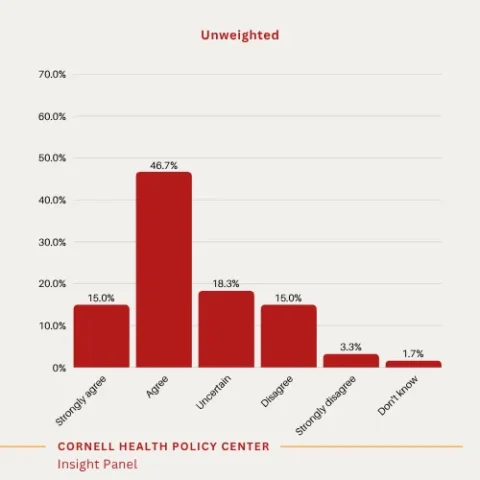
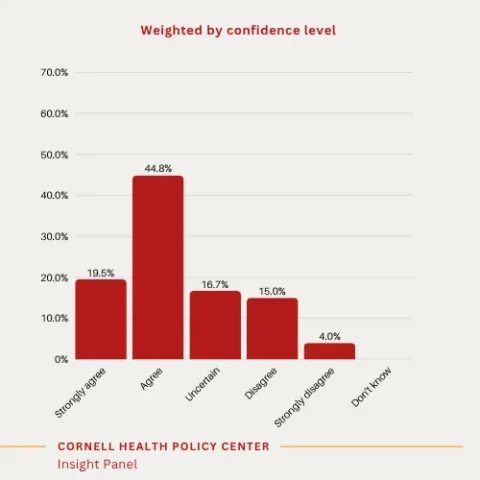
- The majority (62%) of respondents agreed or strongly agreed that by reducing state directed payments to Medicare levels, HR 1 would negatively affect access to care in Medicaid, with a number pointing to evidence that payment rates in Medicaid are a key determinant of provider participation and access in the program. However, panelists also indicated uncertainty given difficulty predicting what other funding sources may compensate for decreases in state directed payments and lack of evidence more broadly on how provider organizations respond to changes in state directed payments.
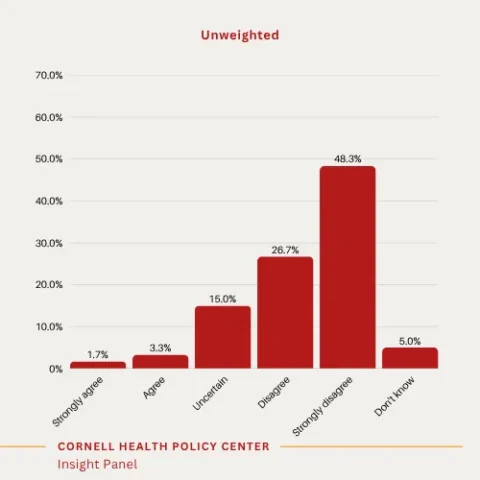
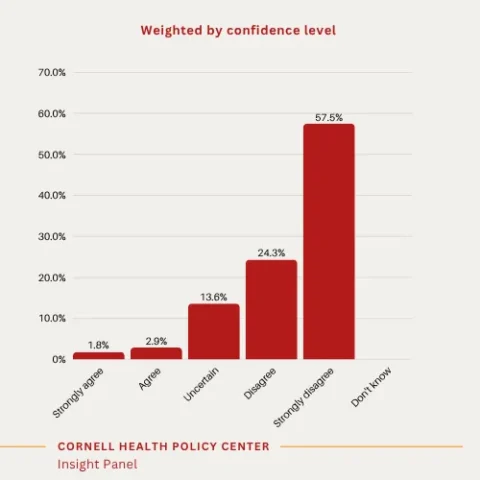
- Three-quarters of respondents disagreed or strongly disagreed that HR 1’s $50 billion Rural Health Transformation Program would compensate for reductions in funding to rural hospitals projected to result from the law’s Medicaid and other provisions. Some panelists noted that the Rural Health Transformation Program was not explicitly intended to offset funding reductions and that restrictions on how the funds can be spent make it difficult to use the program to directly compensate providers for potential operating losses.
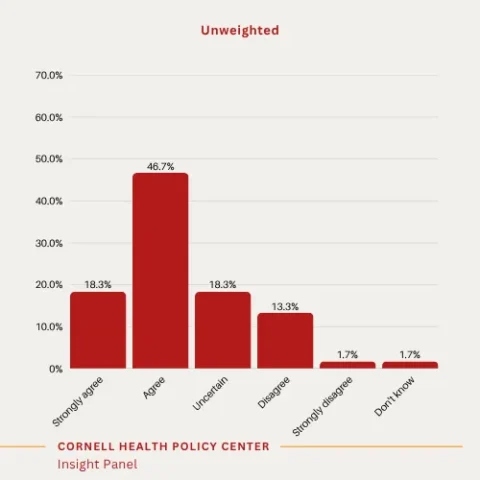
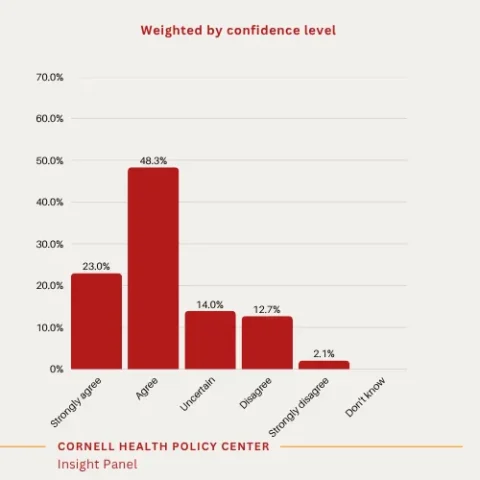
- Nearly two-thirds (65%) of respondents agreed or strongly agreed that states will be more likely to scale back expansions of Medicaid eligibility under the ACA in response to financing changes enacted in HR 1, although one-fifth of respondents indicated they were uncertain or didn’t know. Experts emphasized that while states are unlikely to fully end expansion, some states — especially those that implemented expansion later — may pursue cuts given the large fiscal pressures they are likely to face.
Read the full Health Affairs Forefront summary of results here
Survey Questions
Please note: our surveys will consistently use two modifiers to describe the size of an effect: “Substantial”: when an effect is large enough to meaningfully influence policy decisions, program implementation, or outcomes of interest “Measurable”: when the direction of an effect is clear, but the effect may not be sufficiently large to make much of a difference for a given policy, program, or outcome. Weighting by confidence level removes responses of “don’t know” (weight equals 0). Unweighted responses with responses of “don’t know” removed were qualitatively similar to weighted responses. Unweighted results including “don’t know” responses are presented in the exhibits below.
Response rate of 92% (60 out of 65 panelists responded)
The Budget Reconciliation Act of 2025 (HR 1; Public Law No. 119-21) introduces a number of changes to Medicaid financing.
Question 1: State directed payments require Medicaid managed care organizations to pay certain health care providers at a specified rate, which is often above the level of the typical Medicaid fee schedule.
Reducing state directed payments to Medicare payment levels, as required under H.R. 1, will meaningfully reduce Medicaid enrollees’ access to care.
a. Strongly agree
b. Agree
c. Uncertain
d. Disagree
e. Strongly disagree
f. Don’t know
Question 2: The $50 billion Rural Health Transformation Program will largely offset H.R. 1’s reductions in Medicaid funding for rural hospitals.
a. Strongly agree
b. Agree
c. Uncertain
d. Disagree
e. Strongly disagree
f. Don’t know
Question 3: H.R. 1 will increase the likelihood of some states substantially scaling back their ACA Medicaid expansions in the next five years through large reductions in enrollment or benefits, or ending expansion entirely.
a. Strongly agree
b. Agree
c. Uncertain
d. Disagree
e. Strongly disagree
f. Don’t know
Individual Survey Responses
Reducing state directed payments to Medicare payment levels, as required under H.R. 1, will meaningfully reduce Medicaid enrollees’ access to care.
| Name | Vote | Confidence | Comments |
|---|
| Margarita Alegria | Disagree | 7 | |
| Joseph R. Antos | Disagree | 9 | |
| David Asch | Agree | 8 | |
| John Ayanian | Agree | 5 | |
| Peter Bach | Uncertain | 6 | |
| Laurence Baker | Disagree | 5 | |
| Brian Blase | Strongly disagree | 9 | State-directed payments (SDPs) have become a giant form of corporate welfare, allowing politically powerful hospital systems to obtain enormous additional federal Medicaid funding. Investors have highlighted the substantial revenues and profits that for-profit hospital systems receive from these payments, which can reach average commercial rates nearly three times Medicare rates nationally. Medicaid should not pay hospitals dramatically more than Medicare, which nearly all hospitals accept. Such excessive payments distort the health care market, increase costs including premiums for people with commerical coverage, and can undermine seniors’ access to care by making Medicaid patients much more financially attractive than Medicare patients. |
| David Blumenthal | Agree | 5 | a lot of things happening at once — hard to tease out effects of STPs. |
| Erin Fuse Brown | Agree | 9 | |
| Melinda Buntin | Disagree | 7 | |
| Michael F. Cannon | Uncertain | 10 | Medicaid financing is such a shell game, I don’t expect anyone can predict. |
| Lawrence Casalino | Agree | 5 | |
| Amitabh Chandra | Agree | 8 | |
| Lanhee J. Chen | Disagree | 8 | |
| Michael Chernew | Agree | 5 | |
| Janet Currie | Uncertain | 5 | I don’t know if the typical state directed payments are above or below the MediCARE fee schedule. If they are above Medicare, then reducing them will likely reduce Medicaid enrollees access to care. However, it seems possible to me that the payments are currently above Medicaid but below Medicare, in which case the law will have little effect. |
| Lesley Curtis | No response | | |
| David Cutler | Agree | 8 | |
| Julie Donohue | Agree | 9 | State directed payments have resulted in higher payment rates to providers which are an important determinant of provider participation in Medicaid. Reducing the level of state directed payments to Medicare and not commercial rates may reduce provider participation in some areas leading to reduced access for Medicaid enrollees. |
| Joseph Doyle | Disagree | 5 | Medicare seems acceptable because it is roughly in line with costs and there are fewer hassles to be paid. If Medicaid Managed Care lowers fees to the Medicare rate but keep the payment frictions, that can lead to lower access. |
| Stacie Dusetzina | Agree | 7 | Prior research has shown barriers to getting appointments for patients who have suboptimal insurance coverage / lower reimbursement versus commercially insured people. |
| Jose Esarce | No response | | |
| Elliott Fisher | Strongly agree | 10 | SDRs are an essential tool that can improve access for Medicaid benes. A quick at KFF suggested 37 states will have payments reduced. |
| Richard Frank | Agree | 5 | |
| Craig Garthwaite | Uncertain | 5 | We don’t have a sense of what other funds might be used here to keep some providers whole and/or how care will reallocate across providers. |
| Darrell Gaskin | Uncertain | 6 | |
| Martin Gaynor | Uncertain | 5 | |
| Sherry Glied | Agree | 3 | |
| David Grabowski | Strongly agree | 10 | |
| Jonathan Gruber | Strongly agree | 9 | |
| Vivian Ho | Strongly agree | 10 | This is a complicated issue, but Health Affairs has a great article on this by Debra Lipson. It’s behind a paywall, but this podcast episode is a great substitute: https://www.youtube.com/watch?v=K6vwN5OoCew |
| Jason Hockenberry | No response | | |
| Haiden Huskamp | Don’t know | 0 | I don’t know how often state directed payment levels exceed Medicare levels. |
| Peter S. Hussey | Agree | 7 | |
| Benedic Ippolito | Strongly disagree | 8 | |
| Anupam Jena | Uncertain | 5 | |
| Nancy Keating | Agree | 7 | |
| Aaron Kesselheim | Agree | 7 | Maybe not immediately but certainly over time by adding to the financial pressure on hospitals and other entities that provide care for Medicaid enrollees |
| Jonathan Kolstad | Agree | 7 | |
| R Tamara Konetzka | Agree | 6 | Medicaid is already a less preferred payer, generally. We don’t have good empirical estimates of the magnitude of the supply response. |
| Rick Kronick | Agree | 8 | |
| Valerie Lewis | Agree | 7 | |
| Nicole Maestas | Agree | 8 | |
| Tom McGuire | Uncertain | 5 | |
| Ellen Meara | Agree | 6 | I don’t know how many states exercise this option. In states that do, however, access will suffer with certainty. |
| Ateev Mehrotra | Agree | 6 | |
| David Meltzer | Strongly agree | 10 | |
| Joseph Newhouse | Agree | 5 | I haven’t seen any studies of this so am not especially confident. |
| Sean Nicholson | Disagree | 8 | |
| Steve Parente | Disagree | 8 | |
| Stephen Patrick | No response | | |
| Harold Pollack | Strongly agree | 8 | |
| Daniel Polsky | Strongly agree | 8 | Ambiguous question. I think the question is aimed at the smaller type of SDP. The payments that just bring federal money to the state will also reduce access, but indirectly via less generous financing. https://www.healthaffairs.org/doi/10.1377/
hlthaff.2026.00382 |
| Ninez Ponce | No response | | |
| Thomas Rice | Uncertain | 8 | |
| Meredith Rosenthal | Uncertain | 10 | It is unclear how these payments affect access to care given that there is no real incentive to increase access. For some hospitals, however they may be essential for keeping the lights on. |
| Joseph Ross | Agree | 8 | Lower rates are quite likely to incentivize more physician groups and health plans to stop participating in Managed Medicaid plans, diminishing access. They will also reduce margins at FQHCs, which will lead to cut backs in services. |
| Brendan Saloner | Agree | 10 | Medicaid payments are one of the most well-studied levers that determines access to care for beneficiaries. |
| Kosali Simon | Agree | 5 | |
| Jon Skinner | Strongly agree | 8 | |
| Ben Sommers | Uncertain | 5 | |
| Neeraj Sood | Disagree | 6 | |
| David Stevenson | Agree | 7 | |
| Kevin Volpp | Agree | 7 | |
| Rachel Werner | Strongly agree | 9 | |
The $50 billion Rural Health Transformation Program will largely offset H.R. 1’s reductions in Medicaid funding for rural hospitals.
| Name | Vote | Confidence | Comments |
|---|
| Margarita Alegria | Disagree | 5 | |
| Joseph R. Antos | Strongly disagree | 9 | |
| David Asch | Strongly disagree | 8 | |
| John Ayanian | Strongly disagree | 8 | |
| Peter Bach | Uncertain | 5 | |
| Laurence Baker | Disagree | 6 | |
| Brian Blase | Strongly agree | 8 | The premise that H.R. 1 cuts Medicaid funding is misleading. Federal Medicaid spending will continue growing year after year, following a nearly 80 percent increase between 2019 and 2026. The law’s reforms will reduce wasteful spending, help restore Medicaid to a more sustainable fiscal trajectory, and provide $10 billion annually for five years to strengthen rural health care. This substantial new investment should more than offset the effects of the financing reforms in rural areas while supporting more sustainable rural health care delivery. |
| David Blumenthal | Strongly disagree | 10 | |
| Erin Fuse Brown | Strongly disagree | 9 | |
| Melinda Buntin | Strongly disagree | 7 | |
| Michael F. Cannon | Uncertain | 8 | First, so far as I am aware, Medicaid spending on rural hospitals is increasing, not decreasing. Second, H.R. 1 may be reducing the rate of growth of spending on rural hospitals as the CBO predicted. But I’m not sure we know yet. Third, Medicaid financing is such a (deliberately) opaque shell game, it would be inappropriate to presume we know until the numbers post. Fourth, we may someday learn that H.R. 1 is resulting in rural hospitals receiving less money from Medicaid than they would have under prior law. But Medicaid financing is such a morally hazardous shell game, any such restraint is likely to be minor. Fifth, that means that the RHTP may indeed undo any spending restraints that H.R. 1 might have imposed with respect to rural hospitals. Sixth, that would mean that H.R. 1 *increased* spending on rural hospitals. Seventh, the goal of the RHTP was never really to offset those restraints fully. Its goal was simply to provide political cover for hesitant GOP senators to vote for the party’s tax cuts. Eighth, we can therefore say with confidence that the RHTP achieved its goal. |
| Lawrence Casalino | Don’t know | 0 | |
| Amitabh Chandra | Disagree | 8 | |
| Lanhee J. Chen | Uncertain | 8 | |
| Michael Chernew | Disagree | 8 | |
| Janet Currie | Strongly disagree | 9 | |
| Lesley Curtis | No response | |
| David Cutler | Strongly disagree | 8 | It is much smaller than the relevant spending reductions. |
| Julie Donohue | Strongly disagree | 10 | There are explicit limits on how RHTP funds can be used to reimburse hospitals. RHTP is not intended to address shortfalls in hospital revenue due to other parts of HR1. Rural hospitals will experience substantial declines in revenue due to reductions in Medicaid coverage and a coincident rise in the number of uninsured patients and level of uncompensated care will be substantial. |
| Joseph Doyle | Strongly disagree | 9 | I believe the cuts are substantially larger than the $50 billion, which has restrictions to be used in any event. |
| Stacie Dusetzina | Strongly disagree | 8 | One time payment is not enough. |
| Jose Esarce | No response | |
| Elliott Fisher | Strongly disagree | 10 | |
| Richard Frank | Disagree | 8 | Part of the money is being directed towards expenditures unrelated to the cuts to Medicaid. |
| Craig Garthwaite | Disagree | 6 | |
| Darrell Gaskin | Disagree | 6 | |
| Martin Gaynor | Don’t know | 0 | |
| Sherry Glied | Strongly disagree | 6 | |
| David Grabowski | Disagree | 6 | |
| Jonathan Gruber | Uncertain | 5 | |
| Vivian Ho | Strongly disagree | 10 | $50b is a drop in the bucket compared to all the Medicaid cuts in OB3. |
| Jason Hockenberry | No response | |
| Haiden Huskamp | Uncertain | 10 | |
| Peter S. Hussey | Strongly disagree | 10 | |
| Benedic Ippolito | Uncertain | 7 | Unclear because HR 1’s spending cuts are likely to be delayed or reversed to some degree. |
| Anupam Jena | Don’t know | 0 | |
| Nancy Keating | Strongly disagree | 8 | |
| Aaron Kesselheim | Strongly disagree | 9 | $10B/year for a limited period of time with restrictions on how to access the funds adds up to political lip service to rural communities, not a real attempt to offset drastic Medicaid cuts. |
| Jonathan Kolstad | Disagree | 7 | |
| R Tamara Konetzka | Disagree | 7 | Somewhat sparse empirical evidence points to only a partial offset, and perhaps more importantly, a temporary one. |
| Rick Kronick | Disagree | 7 | |
| Valerie Lewis | Strongly disagree | 9 | |
| Nicole Maestas | Uncertain | 5 | |
| Tom McGuire | Agree | 5 | |
| Ellen Meara | Strongly disagree | 9 | The RHT is small relative to the cuts in volved. |
| Ateev Mehrotra | Strongly disagree | 9 | The money is explicitly devoted to infrastructure and will not help providers in long term. |
| David Meltzer | Uncertain | 5 | |
| Joseph Newhouse | Strongly disagree | 10 | The numbers don’t add up and there have been many press stories about access issues already. |
| Sean Nicholson | Disagree | 8 | |
| Steve Parente | Agree | 8 | |
| Stephen Patrick | No response | |
| Harold Pollack | Disagree | 8 | |
| Daniel Polsky | Strongly disagree | 8 | The program is not designed to offset spending shortfalls and the spending to date seems to confirm that. |
| Ninez Ponce | No response | |
| Thomas Rice | Uncertain | 8 | |
| Meredith Rosenthal | Strongly disagree | 10 | |
| Joseph Ross | Strongly disagree | 9 | This fund is a drop in the bucket when compared to the direct cuts that health systems and other providers will experience. While the program may offset these cuts in a minority of locations, for the vast majority it will not. |
| Brendan Saloner | Strongly disagree | 10 | The money is no where close to offset the other losses in revenue to states. |
| Kosali Simon | Disagree | 6 | |
| Jon Skinner | Strongly disagree | 7 | |
| Ben Sommers | Disagree | 7 | Some hospitals will come out ahead, but some will undoubtedly end up with less than they would have. |
| Neeraj Sood | Disagree | 6 | |
| David Stevenson | Strongly disagree | 10 | |
| Kevin Volpp | Strongly disagree | 9 | |
| Rachel Werner | Strongly disagree | 10 | |
H.R. 1 will increase the likelihood of some states substantially scaling back their ACA Medicaid expansions in the next five years through large reductions in enrollment or benefits, or ending expansion entirely.
| Name | Vote | Confidence | Comments |
|---|
| Margarita Alegria | Agree | 6 | |
| Joseph R. Antos | Agree | 9 | |
| David Asch | Agree | 5 | |
| John Ayanian | Agree | 5 | |
| Peter Bach | Strongly agree | 5 | |
| Laurence Baker | Agree | 6 | |
| Brian Blase | Strongly disagree | 8 | Federal taxpayers finance 90 percent of Medicaid expansion costs, meaning states receive about seven times as much federal funding per dollar of state spending for able-bodied, working-age expansion adults as for traditional Medicaid enrollees. H.R. 1 appropriately limits provider-tax financing schemes that have allowed states to draw down additional federal funds with little real state contribution, with stronger restrictions in expansion states because these schemes can turn $1 in recycled state funds into $9 in federal Medicaid payments a form of de facto money laundering. These reforms should result in states bearing a somewhat greater share of Medicaid’s actual costs, reversing part of the substantial cost shift from states to Washington over the past 15 years. Given the continued generous federal funding for expansion, states are unlikely to substantially scale back or terminate their expansions. If states did, however, many expansion enrollees would qualify for heavily subsidized exchange coverage, and states could redirect Medicaid resources toward the most vulnerable populations. |
| David Blumenthal | Disagree | 6 | |
| Erin Fuse Brown | Agree | 7 | |
| Melinda Buntin | Agree | 5 | |
| Michael F. Cannon | Uncertain | 5 | I don’t think we can say. Again, the reason is that Medicaid financing is such a deliberately opaque, morally hazardous shell game. To the extent that the hospitals’ lobbyists and consultants are more clever and/or motivated than GOP congressional staff or CBO analysts, states will find new ways to game Medicaid’s matching-grant system and therefore will not have to scale back their Medicaid programs. But we can say this. To the extent that states respond to less federal money than they were expecting by scaling back their Medicaid programs, it indicates that current Medicaid spending levels are not popular with voters. If current Medicaid spending levels are popular with voters, they will accede to additional state taxes necessary to maintain that funding. If states scale back their Medicaid programs because H.R. 1 limited their ability to use provider-tax scams, it indicates that states and their voters do not value the marginal dollar of Medicaid spending at even half price. Or even one tenth of the price. It’s a problem that, at the same time everyone assumes states will enact catastrophic Medicaid cuts, no one talks about how that assumption is in fact an admission that voters don’t want Medicaid spending to be as high as it is. We are literally making tens of millions of vulnerable patients dependent for their health care on government subsidies that everyone admits are deeply unpopular with voters. What could possibly go wrong? |
| Lawrence Casalino | Uncertain | 5 | |
| Amitabh Chandra | Uncertain | 8 | |
| Lanhee J. Chen | Uncertain | 5 | |
| Michael Chernew | Disagree | 5 | You said: increase the likelihood. that’s probably true. But I think the likelihood was small and I expect it remains small, so I answered what I thought was the spirit of the question, which is I doubt much scaling back. It remains a good deal and the health systems rely on the funds |
| Janet Currie | Agree | 8 | |
| Lesley Curtis | No response | |
| David Cutler | Agree | 5 | |
| Julie Donohue | Strongly agree | 10 | There is going to be substantial variation in how states interpret and implement the eligibility changes for the ACA expansion. Some states will impose the strictest possible requirements for medical frailty and other exemptions and compliance with community engagement requirements, and impose significant administrative burdens on Medicaid enrollees. Other states will employ all possible strategies to keep ACA Medicaid expansion enrollees in the program. There is tremendous uncertainty over how states will respond and with respect to the cumulative effects of state implementation decisions. |
| Joseph Doyle | Disagree | 7 | |
| Stacie Dusetzina | Uncertain | 5 | Depends on how expansion was passed in the state, I would assume. There will be enrollment reductions most likely due to administrative burdens for work requirements and redeterminations but not sure if States will try to make other changes. |
| Jose Esarce | No response | |
| Elliott Fisher | Strongly agree | 8 | |
| Richard Frank | Agree | 8 | |
| Craig Garthwaite | Disagree | 6 | |
| Darrell Gaskin | Agree | 8 | |
| Martin Gaynor | Agree | 5 | |
| Sherry Glied | Agree | 3 | |
| David Grabowski | Agree | 6 | |
| Jonathan Gruber | Agree | 8 | |
| Vivian Ho | Agree | 10 | Unless there is legislation to unwind OB3, the money won’t be there to sustain the current program structure. |
| Jason Hockenberry | No response | |
| Haiden Huskamp | Agree | 10 | |
| Peter S. Hussey | Disagree | 7 | |
| Benedic Ippolito | Disagree | 5 | |
| Anupam Jena | Don’t know | 0 | |
| Nancy Keating | Uncertain | 5 | |
| Aaron Kesselheim | Strongly agree | 8 | Major problems with access to health care are imminent as a result of HR 1. |
| Jonathan Kolstad | Strongly agree | 6 | |
| R Tamara Konetzka | Agree | 4 | |
| Rick Kronick | Uncertain | 3 | |
| Valerie Lewis | Agree | 9 | |
| Nicole Maestas | Uncertain | 5 | |
| Tom McGuire | Strongly agree | 7 | |
| Ellen Meara | Agree | 7 | |
| Ateev Mehrotra | Agree | 6 | |
| David Meltzer | Strongly agree | 10 | |
| Joseph Newhouse | Uncertain | 5 | State budgets will be under a lot of pressure, but it is hard to take existing benefits away. |
| Sean Nicholson | Agree | 7 | |
| Steve Parente | Agree | 8 | |
| Stephen Patrick | No response | |
| Harold Pollack | Agree | 6 | |
| Daniel Polsky | Agree | 6 | The financial pressure to do this will be substantial, but I also expect policy interventions to ease this pressure. |
| Ninez Ponce | No response | |
| Thomas Rice | Strongly agree | 9 | |
| Meredith Rosenthal | Disagree | 8 | The incentives for states to maintain coverage are strong and the states that expanded first are doing everything they can to minimize losses. While some states are allowing HR1 to have trim their rolls, the same forces that causes red states to expand medicaid will prevent them from abandoning it. |
| Joseph Ross | Uncertain | 2 | I am uncertain of this, since I think many states are attempting to find other ways to maintain the Medicaid expansion, and still others are hoping to simply weather the next few years in the hopes that future legislation will reverse these changes. |
| Brendan Saloner | Strongly agree | 10 | The late adopting Medicaid expansion states have always been more tentative about their participation and could flee if it becomes too financially disadvantageous, especially as state budgets dry up. |
| Kosali Simon | Agree | 6 | |
| Jon Skinner | Strongly agree | 7 | |
| Ben Sommers | Disagree | 5 | I think a full retraction of expansion is unlikely. |
| Neeraj Sood | Uncertain | 6 | |
| David Stevenson | Agree | 7 | |
| Kevin Volpp | Agree | 7 | |
| Rachel Werner | Strongly agree | 9 | |